
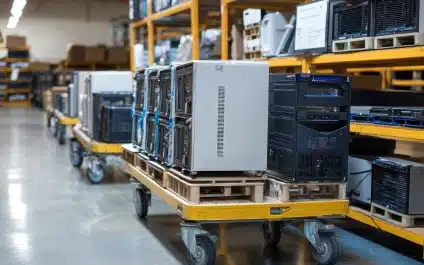
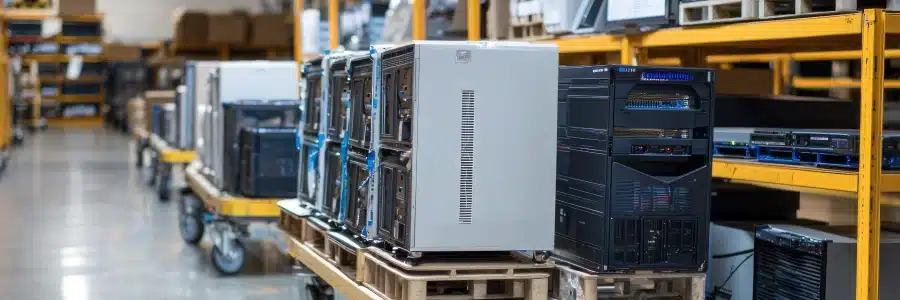
An enterprise IT asset disposition (ITAD) program must include secure multisite logistics, rigorous data destruction, value recovery, and comprehensive asset-level reporting. Establishing a standardized workflow ensures every retired device is securely managed from the moment it is unplugged until it is taken out of service. Without this structured approach, retired devices can become a significant source of financial and reputational risk.
Key Takeaways
- An effective ITAD program protects sensitive information while maximizing financial returns on usable equipment.
- Secure logistics and chain-of-custody tracking reduce the risk of asset loss during transport.
- Rigorous data destruction standards reduce risk of catastrophic breaches and regulatory penalties.
- Intelligent value recovery transforms idle equipment into working capital to offset refresh costs.
How should you manage multisite logistics and tracking?
Managing multisite logistics involves deploying vetted personnel and specialized transportation to gather equipment safely, supported by detailed tracking. Proper custody tracking helps reduce risk of asset loss during transport and creates reliable audit trails for your internal compliance officers.
A clear chain-of-custody process establishes who is responsible for each asset at every stage, from collection at branch offices and regional data centers to delivery at the designated processing facility. Secure pickup is the first step in this process, ensuring that equipment is identified, documented, and accounted for before transport begins.
To maintain visibility throughout this process, scannable asset tags and unique serial numbers can be used to update asset management systems automatically. Different asset types naturally require different handling procedures. Your overarching logistics plan must account for varying sizes, weights, and unique security needs.
Why is data security and destruction so critical?
Data security reduces risk of catastrophic breaches and regulatory fines by enforcing rigorous data sanitization protocols uniformly across your entire fleet. To achieve this, your ITAD vendor must follow strict, verifiable destruction standards that go far beyond a basic factory reset or hard drive formatting.
Data sanitization involves permanently removing data from a storage device so it cannot be recovered. Highly sensitive assets require advanced software erasure techniques or complete physical destruction. The appropriate method must meet established security requirements and be supported by evidence that the process was completed successfully.
Vendor credentials provide an additional layer of assurance. NAID AAA Certification, for example, involves independent audits of information destruction practices and helps organizations assess whether a vendor follows established security procedures. Following sanitization, detailed destruction records provide documented evidence of how each asset was handled and processed, supporting internal audits and regulatory compliance.
How can value recovery offset refresh costs?
Value recovery transforms idle equipment into working capital by remarketing usable technology to qualified secondary buyers. Depending on the age, condition, and resale demand for retired assets, this process can recover a portion of their residual value while reducing disposal costs. The proceeds can then help fund new software projects, hardware upgrades, or additional user licenses.
A strong ITAD program evaluates equipment for resale and recycling. Recovering value from your retired hardware creates a financial feedback loop that reduces your overall annual IT refresh costs. You successfully extend the useful life of perfectly good electronics while recovering value from assets that would otherwise go unused.
When should you commit to electronics recycling?
Electronics recycling is appropriate when broken or severely obsolete hardware cannot be refurbished for resale. Proper disposal methods keep hazardous waste out of the environment while feeding valuable raw materials back into the global manufacturing supply chain.
Unregulated electronic waste presents a severe environmental threat to local communities. Dangerous chemicals and heavy metals easily leach into the soil and water supply if discarded in a standard municipal landfill.
You must carefully select a partner who is committed to certified recycling standards. These frameworks dictate exactly how valuable materials such as industrial plastics, raw copper, and rare precious metals are safely extracted. Meeting these regulatory compliance mandates shows stakeholders that your company takes its environmental footprint seriously.
| Asset Condition | Primary Disposition Path | Core Benefit to Organization |
|---|---|---|
| Functional and modern | Value recovery and resale | Generates direct revenue to offset IT costs. |
| Obsolete | Certified recycling | Protects the environment and ensures compliance. |
| Heavily damaged | Physical shredding | Extracts raw materials and permanently destroys data. |
What does asset-level reporting provide?
Asset-level reporting provides clear documentation of how each item in your corporate inventory is handled. These records help IT teams update asset management systems, maintain accurate inventory records, and complete retirement procedures.
Final reporting should include certificates of data destruction and documentation of environmental compliance. These records support audit readiness and help demonstrate adherence to applicable regulatory requirements. Accurate asset tracking and timely record updates also help prevent retired equipment from remaining on financial records, reducing the risk of inventory discrepancies and errors in asset valuation.
How does ITAD build a culture of security?
Treating ITAD as a core business function establishes a culture where security and compliance are woven into every single technology decision. Procurement teams can confidently plan complex refresh cycles knowing exactly how outgoing equipment will be securely processed and tracked.
Working collaboratively with a dedicated ITAD services provider can simplify asset retirement by centralizing logistics, data destruction, and reporting under a consistent process. This helps reduce the risk of lost equipment and ensures that third-party recycling and disposal practices are properly documented.
A proper disposition strategy turns potential liabilities into true business advantages. Reach out to our team at Urban Technologies today to build a customized enterprise ITAD program that secures your data and maximizes your returns.
FAQ
What does ITAD stand for?
ITAD stands for IT asset disposition. It refers to the process of managing retired or unwanted corporate electronic equipment through secure data destruction, value recovery, reuse, recycling, or responsible disposal.
Why can't we just erase hard drives internally?
Standard drive formatting often leaves residual data that cybercriminals can easily recover. Certified ITAD vendors use specialized software to overwrite data to NIST SP 800-88 Rev. 2 standards or physically shred the drives so that the data can no longer be extracted.
How long does the ITAD process take?
The timeline depends on the volume and location of your assets. Simple pickups may take a few weeks, while complex, multisite decommissioning projects can span several months.